
Garage Door Troubleshooting Spring, TX | Fix It Guide – (346) 514-5120
Garage door not working? Diagnose the problem before you call. Free troubleshooting guide for Spring, TX. Call (346) 514-5120 if you need a technician.
Garage Door Troubleshooting: Diagnose Your Problem in Spring, TX
Not every garage door problem needs a technician right away. This guide walks through the most common issues we hear about from Spring, TX homeowners, what’s actually causing them, and whether it’s something you can safely check yourself before picking up the phone.
Start Here: What’s Actually Happening?
Most garage door problems fall into a handful of recognizable patterns. Find the one that matches what you’re seeing below, and we’ll walk you through what it likely means.
My garage door won’t open at all, and I heard a loud bang last night or this morning.
This is almost always a broken torsion spring. The bang is the sound of the spring snapping under tension. Do not attempt to open the door manually or with the opener. Leave it as is and call for a spring replacement. This is never a DIY repair.
The opener motor runs, but the door doesn’t move.
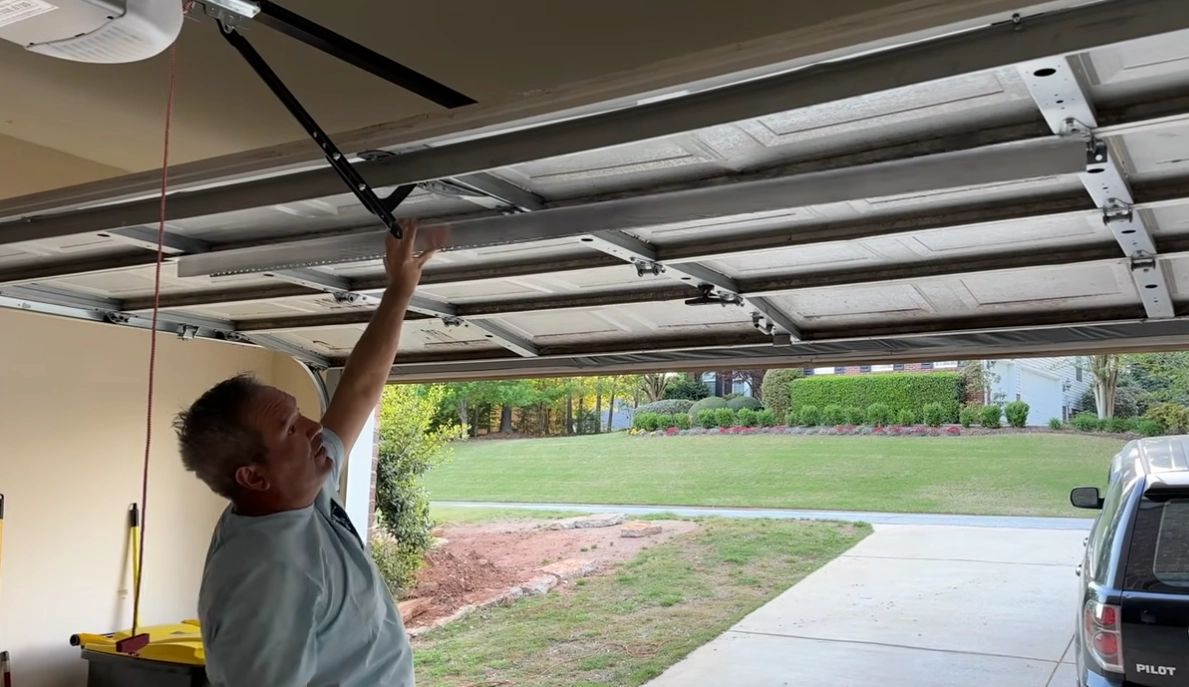
Check whether the emergency release cord (the red handle hanging from the trolley) has been pulled or bumped, disconnecting the trolley from the drive. If so, and the door is fully closed, you can typically re-engage it by pulling the cord toward the door until it clicks back into place. If the door lifts easily by hand after disconnecting, this is likely the cause. If it feels heavy, the spring is the more likely issue.
The trolley or chain is moving, but the door isn’t opening.
This usually points to the same emergency-release disconnection described above, or in some cases, a stripped internal gear if you hear grinding or humming without door movement. A disconnected release cord is a simple, safe fix; a stripped gear needs a technician.
My garage door reverses before it fully closes.
This is typically a dirty, misaligned, or sun-glared photo-eye sensor near the bottom of the track on either side of the door. Wipe both sensor lenses with a soft cloth and check that both LED indicator lights are solid, not blinking. If cleaning doesn’t resolve it, the sensors may need realignment or replacement.
The door is very heavy to lift by hand.
This points to a failing or broken spring. Do not force the door open, and don’t rely on the opener to compensate for a weak spring, since that accelerates wear on the motor. This needs a technician.
The door is light and easy to lift by hand, but the opener won’t engage.
This points to a drive-side issue rather than the spring, commonly a disconnected trolley (see the emergency-release check above) or an opener electrical issue. Often more approachable to self-diagnose than a heavy-door symptom.
My garage door is making a loud grinding or squealing noise.
Usually worn or corroded rollers are common in Spring, TX, given the humidity here. Try lubricating rollers and hinges with a silicone- or lithium-based lubricant, not WD-40. If the noise persists after lubrication, the rollers likely need replacement.
My garage door looks crooked or is stuck at an angle.
This suggests an off-track door, often from a broken cable, worn roller, or storm impact. Stop operating the door immediately an off-track door may still be under spring tension, and forcing it can cause further damage or injury. Call for an inspection.
My garage door opener works sometimes but not consistently.
Intermittent failures often point to a dirty or misaligned sensor, a power-surge-damaged logic board (especially after a storm), or a weak remote/keypad battery. Start with the simplest checks: battery and sensor cleaning, before assuming a bigger problem.
My garage smells musty, or I see daylight under the closed door.
This points to worn or gapped weatherstripping, not a mechanical door problem. It’s a common issue in Houston’s climate as seals crack under sustained heat and UV exposure, and it’s a straightforward, inexpensive repair.
Quick Reference: DIY-Safe vs. Call a Professional
- Safe to check yourself: emergency release cord reconnection, sensor cleaning, remote/keypad battery replacement, lubricating rollers and hinges, visual inspection for rust or fraying
- Always call a professional: any spring adjustment or replacement, cable replacement, an off-track or stuck door, opener gear or motor issues
Still Not Sure What’s Wrong?
If your symptom doesn’t clearly match one of the patterns above, or if you’re not confident distinguishing a heavy door from a light one, call us and describe what you’re seeing. We do phone troubleshooting before dispatching a technician whenever it’s possible to solve the problem; that way, a lot of “broken opener” calls turn out to be a two-minute fix that shouldn’t cost a truck-roll fee.
A Few More Specific Symptoms Worth Knowing
My garage door opens partway and then stops or reverses on its own.
This often points to the opener’s travel limit or force settings being miscalibrated, sometimes after a battery replacement or power interruption resets them. It can also indicate the door is meeting resistance somewhere in its track, such as a partially bent rail. If adjusting the settings through the opener’s manual doesn’t resolve it, a technician can recalibrate it properly.
My garage door remote works, but the wall switch doesn’t (or vice versa).
This usually isolates the problem to one specific control rather than the opener itself, a dead remote battery, or a wiring issue at the wall switch, rather than a motor problem. Testing both controls separately helps narrow down where the actual fault is before calling for service.
My garage door was fine yesterday and now won’t respond to anything.
Start with the basics: check whether the opener is receiving power (look for an indicator light on the motor unit), check the circuit breaker, and confirm the emergency release cord hasn’t been engaged. A sudden total loss of response, after ruling out a power issue, often points to a logic board failure, sometimes from a storm-related surge.
Why Phone Diagnosis Saves Time and Money
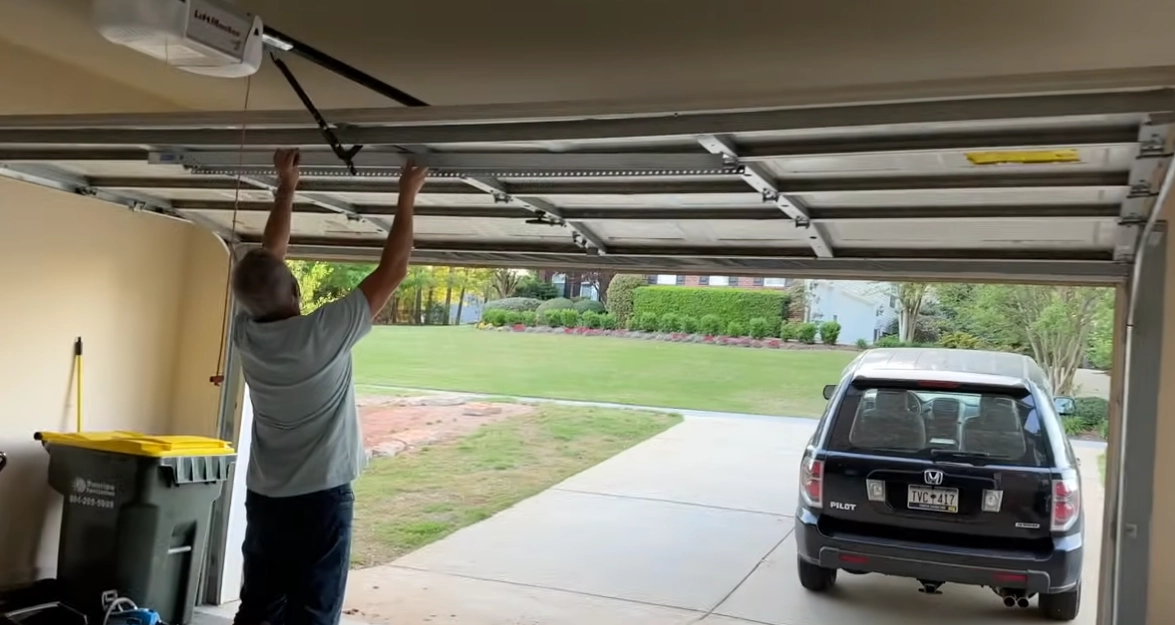
A large share of the calls we take turn out to be one of the simple issues covered on this page: a disconnected release cord, a dirty sensor, a dead battery. Walking through your specific symptom with us on the phone before scheduling a visit means you’re not paying for a truck roll on something you could have fixed yourself in two minutes, and if it does need a technician, we arrive already knowing what to expect and what parts to bring.
Frequently Asked Questions
Contact Us
Address: 23801 Cypresswood Dr, Spring, TX 77373
Phone: (346) 514-5120
24/7 emergency line, standard business hours for scheduled work.
Call now for same-day service, or request a free written estimate online.